| |
| Wednesday, 18 November 2026 |
| Time Machines: Clocks in Art and Literature from c.1300 to Now |
| Christina Faraday |
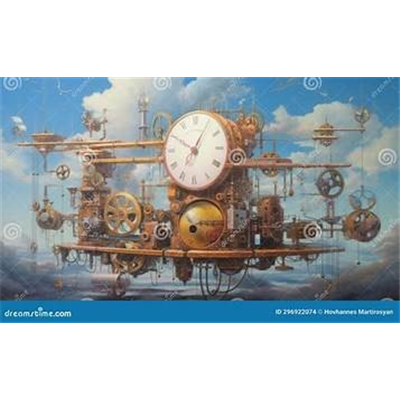 |
Few people nowadays give more than a second thought to their clocks: practical, sometimes beautiful, devices that form the background noise of our daily lives. But from their introduction in the thirteenth century onwards, clocks have held a variety of philosophical and social meanings. This talk explores the visual and literary uses of the clock, the varied meanings it could hold throughout the ages: as an ominous symbol of oncoming death, but also as a metaphor for the soul, for capitalism, and for the good use of time. Dr Christina Faraday FSA FRHistS is a historian of art and ideas, specialising in Tudor and Stuart Britain and the wider 16th and 17th-century world. She is an Affiliated Lecturer in History of Art at the University of Cambridge, a Trustee of the Walpole Society for British art history, and a BBC New Generation Thinker, appearing regularly on BBC Radio 3 and in other popular media. She is the host of British Art Matters podcast, and from 2020-2025 she was a Research Fellow in History of Art at Gonville and Caius College, Cambridge. She is an experienced lecturer, teaching for the History of Art Department at the University of Cambridge, The Wallace Collection, the National Gallery, London, and for Professional and Continuing Education at Cambridge, where she is Co-Director of the MSt in History of Art and Visual Culture. Her first book, Tudor Liveliness: Vivid Art in Post-Reformation England, was published in 2023 by the Paul Mellon Centre and Yale University Press. Her latest book, The Story of Tudor Art, was published by Head of Zeus/Bloomsbury in September 2025 and was named a Times and Sunday Times Book of the Year. |
|
| Wednesday, 16 December 2026 |
| Christmas with Giles, Grandma and the Family |
| Barry Venning |
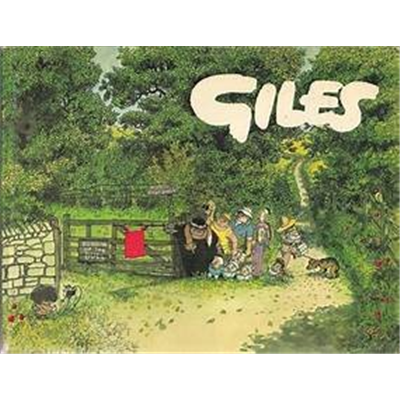 |
The cartoonist, Carl Giles, once said that he loved his creation, Grandma Giles – that fearsome, black-clad, gambling, drinking battleaxe – because she allowed him to say things through his cartoons that he was too polite to say in person. She helped him to poke fun at authority in all its forms, from Hitler to traffic wardens and even his employers at the Daily Express, who didn’t trust him and had sub-editors scouring his cartoons for subversive background details. His admirers included Prince Charles, Sir Malcolm Sargent and Tommy Cooper, and it was no surprise when he was voted Britain’s best-loved cartoonist in 2000. Barry Venning is an art historian whose interests and teaching range from the art of late medieval Europe to global contemporary art. He has published books, articles and exhibition catalogue essays on Turner, Constable and European landscape painting, but also has an ongoing research interest in postcolonial art and British visual satire. He works as a consultant and associate lecturer for the Open University. His media work includes two BBC TV documentaries, radio appearances for BBC local radio and abc Australia, and a DVD on Turner for the Tate. |
|
| Wednesday, 17 February 2027 |
| Les Trois Grandes Dames of Impressionism |
| Sarah Burles |
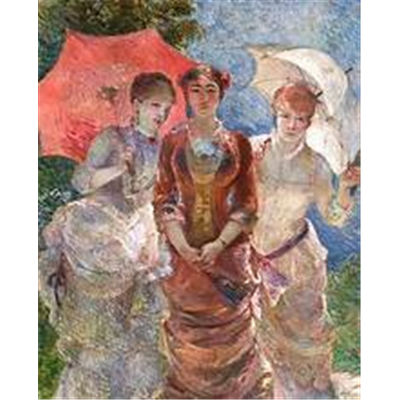 |
The Impressionists were an innovative and radical group of artists whose took Paris by storm in the 1870s. Using new colours and techniques, they created paintings of modern life which shocked and horrified the art establishment. From the start the group included women artists but their contribution to Impressionism has often been overshadowed by their male contemporaries. Marie Bracquemond, Berthe Morisot and Mary Cassatt all exhibited regularly at the Impressionist exhibitions alongside artists such as Monet, Renoir and Degas. Sarah Burles studied History of Art at Cambridge University before doing a master’s degree at University College London. She went on to have a career in museum and gallery education, establishing new services in three different museums before working at the Fitzwilliam Museum for many years. Sarah is the founder of Cambridge Art Tours, which runs tours and courses in and around East Anglia, as well as online. She is a Tour Director for an award-winning travel company and has led tours to Italy, France, Germany, Belgium and America. Sarah became an Arts Society accredited lecturer in 2021 and, since then, has given lectures and run study days for Arts Societies throughout the UK, as well as in Germany, Holland and New Zealand. |
|
| Wednesday, 17 March 2027 |
| Romance and Rocks: Welsh Landscape Art |
| Ed Montana Williams |
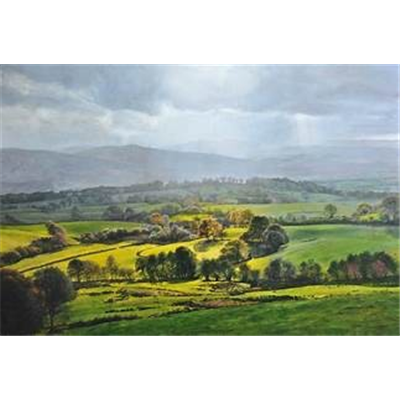 |
‘Welsh Art’ and Wales as an artistic destination are perhaps not subjects which have been given serious attention in the past. Welsh artists are often considered to be, at best, minor figures within the wider canon of British Art. Similarly, depictions of Wales are often little appreciated when considered alongside more ‘exotic’ locations. Ed Williams is based in the Northwest of England, as an Oxford educated Art Historian, he is passionate about sharing his love of the History of Art to a range of audiences. He works at TATE Liverpool, delivering tours and talks of the collection and special exhibitions he is also an official Green Badge Tour Guide for North Wales. In addition to leading tours Ed teaches the History of Art at the University of Liverpool, where he specialises in teaching adult learners at the Department of Continuing Education. |
|
| Wednesday, 21 April 2027 |
| Ravilious, the Pilot and the Missing Aircraft |
| Melody Foreman |
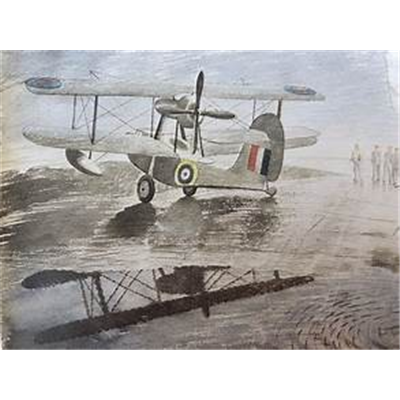 |
One of the greatest mysteries of the 20th century is explored in this lecture which reveals the world of war artist Eric Ravilious, his desperate fascination with the mystical far North, his disappearance over Icelandic seas on September 2, 1942, and his legacy of omnipotent paintings. The life and times of the romantic pilot Flt. Lt. Alfred Culver who vanished with him on the same flight is also uncovered following exclusive research of family letters and photographs which led to my latest non-fiction book, Love As Strong As Death: Ravilious, The Pilot and the Missing Aircraft. Foreword by BAFTA award winning director Margy Kinmonth. Melody Foreman is an author, journalist, cultural historian and biographer now specialising in Art and War. She is a graduate of the University of Kent, UK, and the University of Utrecht in The Netherlands. She has worked as a researcher on ITV documentaries and was the editor of an award-winning newspaper. She is the author of several non-fiction titles published by Pen & Sword and Fighting High Books. These include the bestselling - A Spitfire Girl, The Wreck Hunter, From the Battlefield to the Big Screen, Dad’s Army Goes to War. Her latest book published in 2026 is - Love As Strong As Death, Ravilious, The Pilot and the Missing Aircraft. This is now added to her list of Arts Society lectures. Melody has interviewed many actors, directors, writers and artists and has entertained audiences at a variety of leading venues across Britain including Benenden School, Bentley Priory Museum, historic houses and churches. She has also worked as an expert bookseller. In 2025 she joined the team of heritage guides and experts at the Jacobean country property and gardens - Godinton House in East Kent. In 2026 and in association with holistic therapist Christine Bailey she founded - The Art of Calm - a unique experience which explores within participatory workshops, the restorative benefits of painting with watercolours. Melody is a member of The Arts Society Egerton, Kent. |
|
| Wednesday, 19 May 2027 |
| The Pre-Raphaelite Brotherhood |
| Sarah Ciacci |
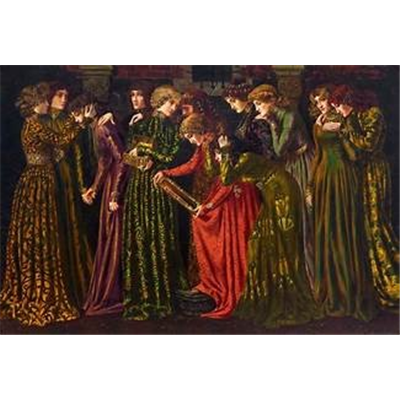 |
The Pre-Raphaelite Brotherhood were a group of young artists who came together in 1848 to shake up an art world they considered stultified and untruthful, because artists were encouraged to copy only the Old Masters, especially the art of Raphael. So, the pre-Raphaelites looked for inspiration from artists that came before Raphael (hence Pre-Raphaelite) and looked for more truthful and honest subject-matter. Not only were they art world rebels, but they also produced works of art that enjoy great popularity today, which we will explore in this talk. Sarah Ciacci has an MA in History of Art (Late 19th century French Painting and 20th Century Art) from University College London. She has been a Blue Badge Guide for London since 2008, specialising in art, museums and galleries, so relevant tours and visits for talks can be arranged. Since 2008 she has trained Blue Badge Guides in the National Gallery and is an art lecturer for trainee guides in Tate Britain, Tate Modern and for a period the National Portrait Gallery. From 2008-2023 she was Adjunct Faculty at Richmond University teaching the History of British Art, the History of Museums in London and the History of London. She is a gallery educator and runs regular courses and independent lectures on a variety of art historical periods. |
|
| Wednesday, 16 June 2027 |
| Urban Noir: Edward Hopper’s ‘Nighthawks’ |
| Kathy McLaughlan |
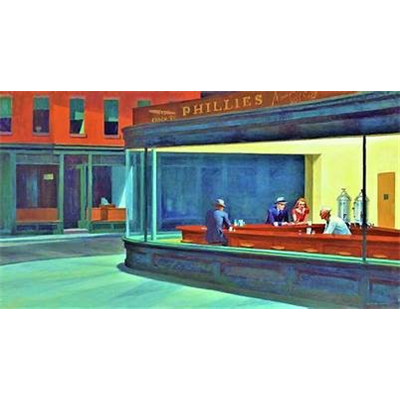 |
Edward Hopper's paintings of urban life are typically characterized by a sense of loneliness and alienation. The most celebrated example is Nighthawks, a work of 1942, which depicts three men and a woman gathered in a brightly illuminated restaurant in downtown New York. We are given few clues as to the identity of these people, whether they know each other or are in any way related. It is in fact the inexplicable quality of this scene which has made it so intriguing to generations of viewers and has turned Nighthawks into one of the iconic images of 20th century urban life. A lecturer specialising in 19th-century art history, I am currently a course director at the Victoria & Albert Museum, organising courses and study days on the history of art and design. I teach at several institutions, including Art Pursuits. I am a graduate of Oxford University and the Courtauld Institute, with a PhD on French 19th-century painters in Rome. |
|